



Related Posts
- ▶ How does axle placement affect semi trailer load distribution?
- ▶ How to choose dump trucks for steep haul roads
- ▶ What causes excavators to lose hydraulic power?
- ▶ How to read load charts for truck cranes
- ▶ How to check used truck cranes for boom damage
- ▶ What causes dump trucks to tip over during unloading?
Send Us A Message
How to choose dump trucks for steep haul roads
Choosing dump trucks for steep haul roads is about more than payload capacity. Gradeability, braking performance, traction and operating costs all affect whether a truck can keep material moving safely. A model that looks productive on a specification sheet may struggle if the route is steeper, softer or longer than the conditions used to rate it.
Start with the route, not the advertised payload
Map the full haul cycle in both directions. Record the steepest sustained grade, short ramps, road width, turning areas and the condition of the surface in wet and dry weather. Note where the truck will travel loaded: a loaded descent demands a different braking assessment from an empty return downhill.
Gradeability figures are useful for comparing models, but ask how they were established. Gross vehicle weight, tire size, gearing, rolling resistance and altitude can all affect climbing performance. A truck that can just climb the worst section may still hold up the entire operation if it crawls uphill or has no margin for deteriorating road conditions.
Treat downhill control as a selection requirement
For a long descent, service brakes alone should not be assumed to provide continuous speed control. Ask the supplier for the truck’s retarding options and downhill performance information at the intended gross weight and operating speed. Engine braking or a suitable retarder can help control speed, but its capability depends on the configuration and conditions.
Compare the descent profile with the manufacturer’s operating guidance, including gear selection and any limitations on sustained braking. Brake inspection, cooling and maintenance access matter too. A truck that saves money upfront is a poor choice if its braking package cannot handle the route repeatedly.
Match traction and chassis to the surface
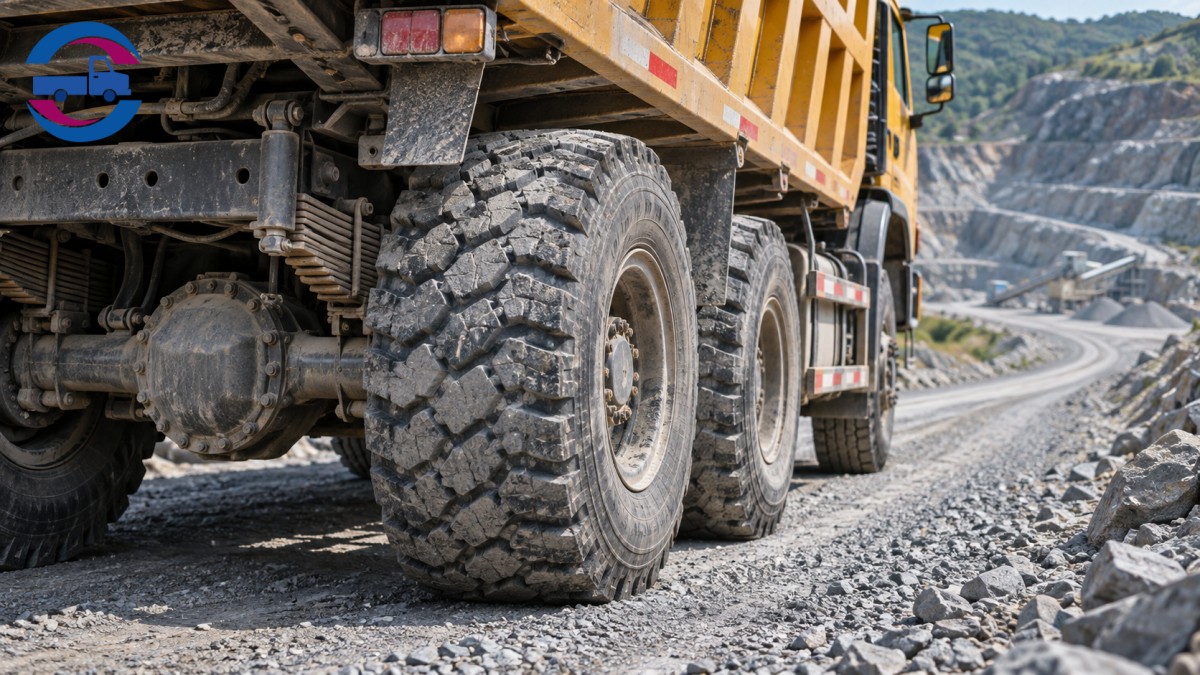
A firm, maintained road may favor a conventional road-going tipper. Loose rock, mud or uneven grades can justify examining driven axle configuration, differential locks, tire choice and ground clearance more closely. More driven axles may improve traction, but can add weight, purchase cost and drivetrain maintenance.
Also check axle loads and weight distribution at the proposed payload, not just the nominal body capacity. Dense material can reach the truck’s legal or technical weight limit before the body is full. Local road requirements and site rules should be checked separately, especially when trucks travel between public roads and the project site.
Compare output per cycle, then check support
A larger body does not automatically mean more material delivered per shift. Estimate loading, climbing, dumping and return times for each configuration, allowing for the speed restriction imposed by the steepest sections. Include fuel, tire wear, maintenance and likely downtime in the comparison. If a larger truck slows the cycle or exceeds the capacity of the loading equipment, a smaller configuration may be the more practical choice.
Before ordering, request the manufacturer’s performance information for the proposed engine, transmission, axles, tires and gross weight. Confirm spare-parts availability, service arrangements and shipment details as well. Shandong Chengchi Construction Machinery Co., Ltd. coordinates sourcing and order follow-up for international buyers; providing the route profile and operating conditions early helps make configuration discussions more useful.
The final decision should rest on the complete route, particularly the worst loaded climb or descent. If the supplier cannot substantiate performance for that section, resolve the gap before committing to the fleet.
- Last One:No more articles
- Next Article:No more articles