


Related Posts
- ▶ How does axle placement affect semi trailer load distribution?
- ▶ How to choose dump trucks for steep haul roads
- ▶ What causes excavators to lose hydraulic power?
- ▶ How to read load charts for truck cranes
- ▶ How to check used truck cranes for boom damage
- ▶ What causes dump trucks to tip over during unloading?
Send Us A Message
What causes excavators to lose hydraulic power?
What causes excavators to lose hydraulic power?
Excavators can lose hydraulic power gradually or without warning, slowing cycle times and making routine work difficult. For maintenance technicians, the cause may be as simple as low or contaminated hydraulic fluid, or as complex as pump wear, internal leakage, or a faulty relief valve. Identifying the symptoms and checking the system methodically can help prevent unnecessary parts replacement, reduce downtime, and restore reliable machine performance.
Start with the pattern of the failure
The most useful first question is whether the weakness affects every function or just one. Slow boom, bucket, swing and travel functions point toward a shared problem, such as inadequate pump output, an oil supply restriction or an engine that cannot maintain speed under load. If only the bucket is weak while other functions operate normally, look more closely at that circuit, including its cylinder, hoses, control valve and any circuit-specific relief valve.
Note when the problem appears. A machine that works normally when cold but slows as the oil warms may have excessive internal leakage: thinner hot oil can pass more easily through worn clearances. Weakness immediately after servicing, by contrast, makes an incorrect oil level, a disturbed suction connection or the wrong filter worth checking before assuming the pump has failed.
Check the oil supply before testing components
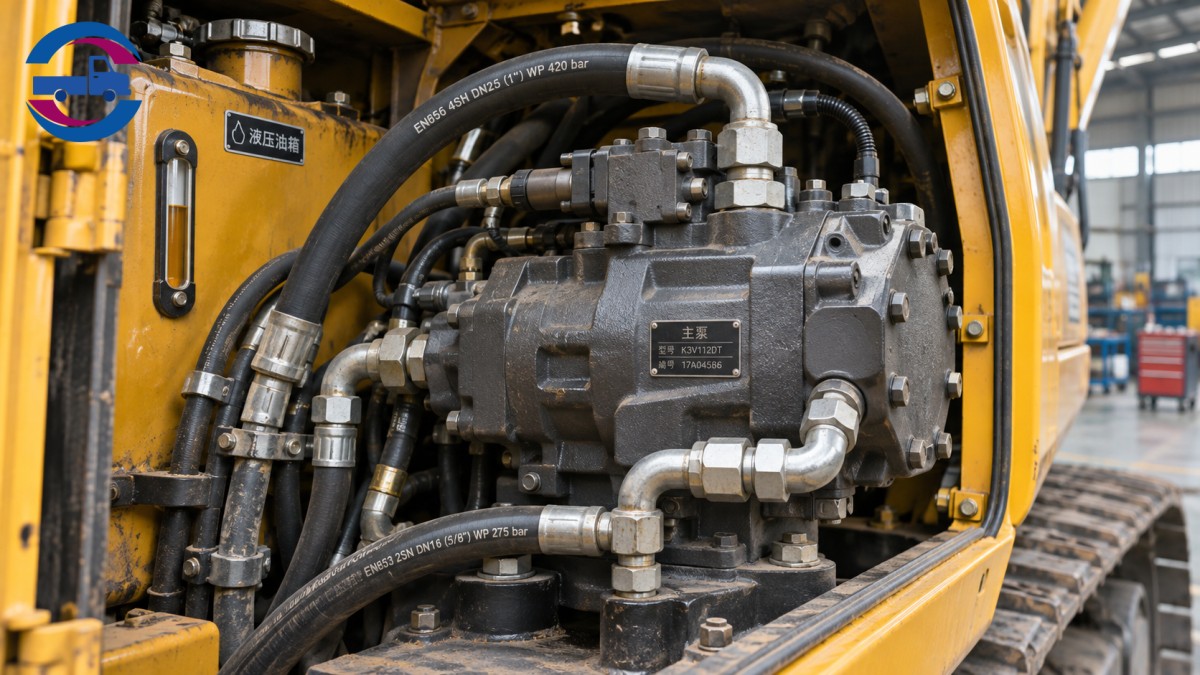
Park the excavator on level ground and check hydraulic oil using the position and procedure specified for that model. Low oil can allow air into the system; foaming, erratic movement and unusual pump noise are warning signs. Inspect for external leaks and check the suction line and connections for damage or looseness. Air can enter on the suction side without producing an obvious oil leak.
Dirty oil, a restricted suction strainer or an incorrect or blocked filter can also interfere with supply. Check the maintenance history and inspect accessible filter elements for debris using the manufacturer’s procedure. Metallic particles deserve attention, but they do not identify the failed component on their own. Preserve a sample or the filter for further inspection rather than replacing parts on appearance alone.
Separate pressure problems from flow problems
Hydraulic pressure is associated with the force available to move a load; flow largely determines actuator speed. A slow function is therefore not automatically a low-pressure problem. A worn pump may produce inadequate flow, particularly when hot, while a relief valve stuck open or set incorrectly can limit pressure and leave the machine unable to dig or lift effectively.
Use the machine’s specified test ports and procedures to check pressures and, where appropriate, pump flow at the prescribed engine speed and oil temperature. Compare readings with the service manual for the exact model and configuration. A pressure reading alone cannot confirm pump condition: a flow test under load may be needed to distinguish pump wear from a control or valve issue.
Do not increase a relief setting simply to make the machine feel stronger. Incorrect adjustment can overload components and hide the actual fault. Pilot pressure, pump control signals and electrical faults can also affect output on machines that use electronic or pilot-operated controls; check fault codes and the relevant control circuit before condemning the main pump.
When one function is weak
A leaking cylinder seal, damaged hose, sticking spool or faulty port relief valve can cause a local loss of performance. Excessive cylinder drift under a held load may indicate internal leakage, but control-valve leakage or an external leak can produce similar symptoms. Isolate and test the circuit according to the service manual before ordering a cylinder seal kit or valve assembly.
Engine condition matters too. If engine speed drops heavily whenever a hydraulic function is loaded, investigate the engine and its controls as well as the hydraulic system. A weak engine can make a sound pump appear defective; an incorrectly controlled pump can also place excessive demand on the engine.
Keep the diagnosis safe and traceable
Lower attachments, shut down and release stored pressure as directed by the manufacturer before disconnecting hydraulic lines. Hydraulic oil under pressure can penetrate skin; never use a hand to search for a leak. Pressure and flow tests should be performed by trained personnel using equipment rated for the system.
Record the machine model, serial number, oil temperature, affected functions and test readings. These details are useful when sourcing parts or service documentation, especially for mixed fleets of excavators and construction trucks. Shandong Chengchi Construction Machinery Co., Ltd. coordinates machinery sourcing and order follow-up for international buyers; confirming the exact configuration and documentation available before an order can make later maintenance easier.
- Last One:No more articles
- Next Article:No more articles